How to Cook Pasta in the Instant Pot

Published Dec 10, 2019•Updated Jan 28, 2026
This post may contain affiliate links. Please read our disclosure policy.
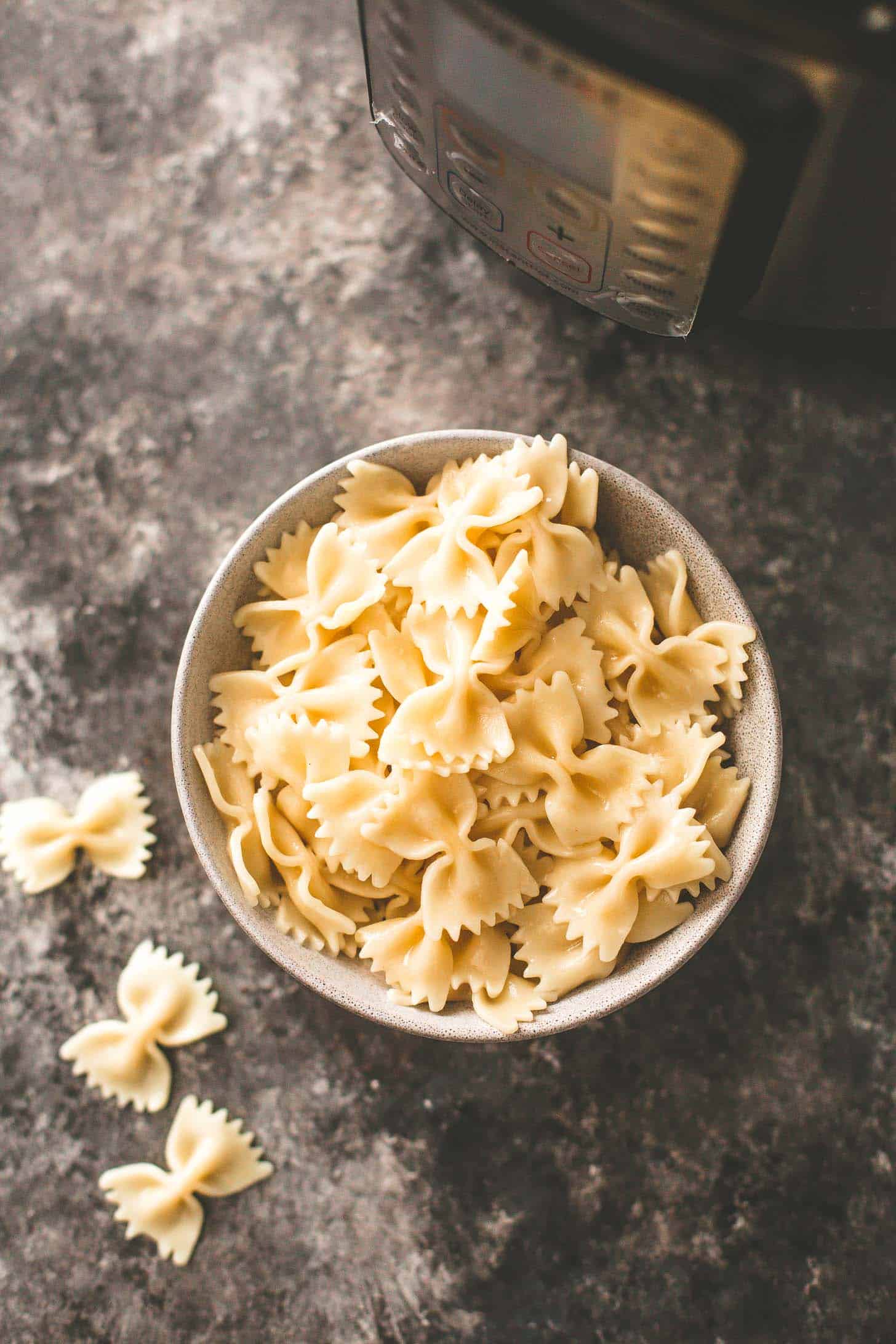
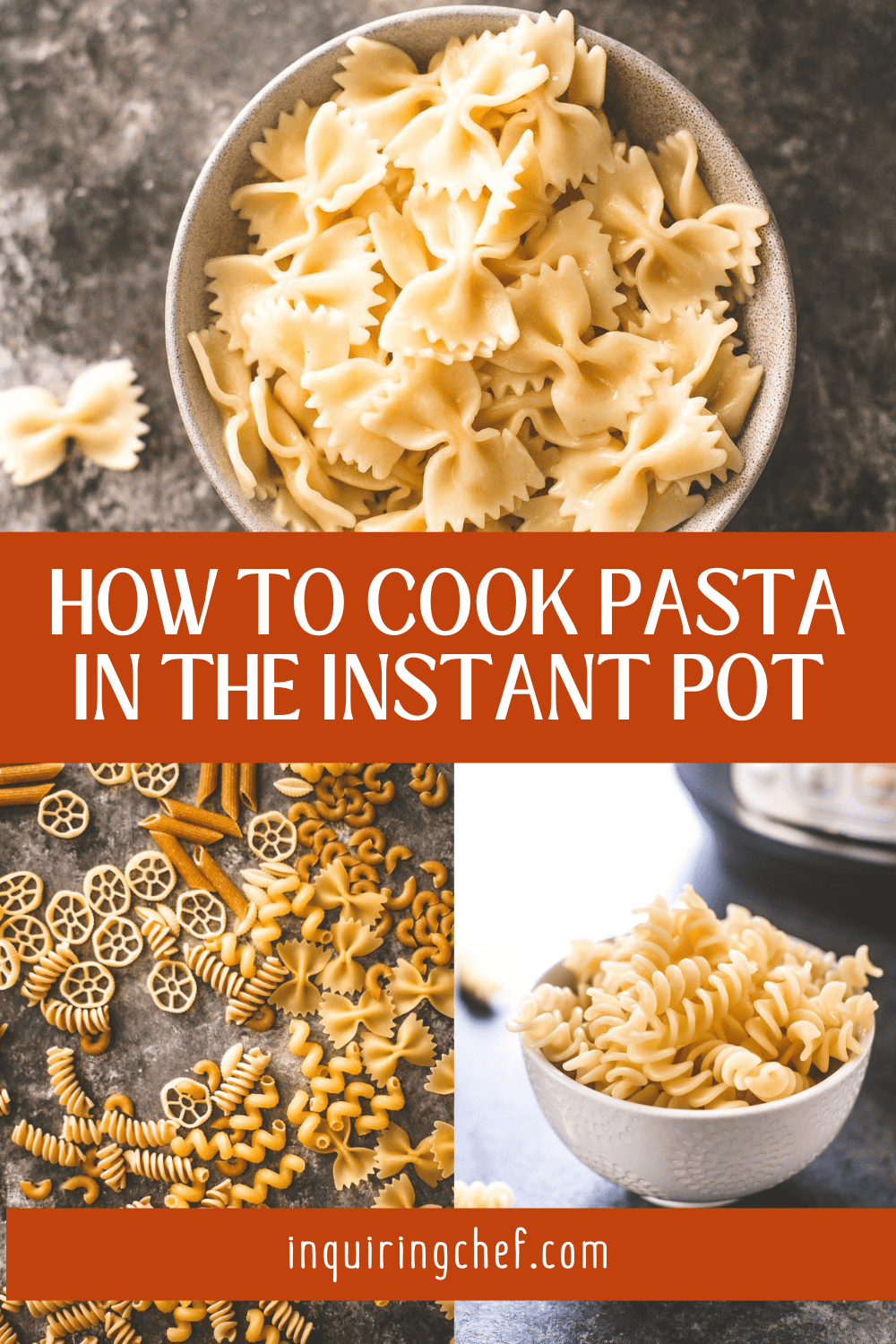
Use these easy step-by-step instructions to cook perfectly al dente pasta in a 6-quart Instant Pot / pressure cooker. I tested this method with 20+ varieties of pasta to insure that it works every time. With over 1 million page views and 300+ positive reviews this method is tested and perfected.
Reader Julie says: ⭐⭐⭐⭐⭐ Three years after finding it, I’m still using this formula!
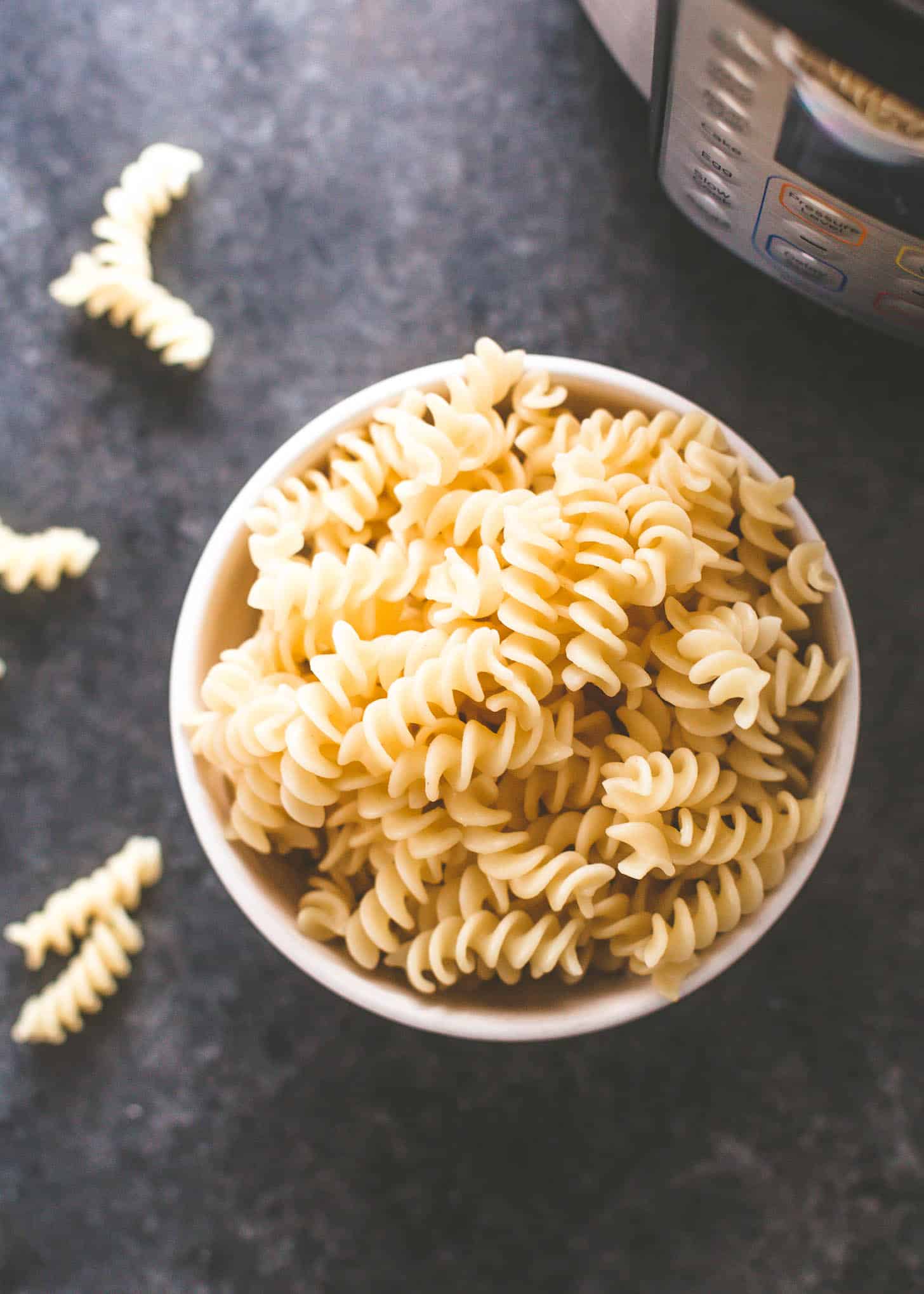
Pasta has been my Instant Pot nemesis ever since I fell in love with the kitchen gadget of the moment. In the past few years I’ve become pretty confident when cooking in the pressure cooker. It only took a few weeks to get over my fear of releasing the pressure valve. 😉
These days, I use the pressure cooker a couple times a week to make everything from rice, to a big pot of Crispy Pork Carnitas, to 20-minute weeknight meals like Chickpea Curry with Rice. But pasta is tricky.
That is, until I learned the Instant Pot pasta formula. It involves a tiny bit of math, but the payoff is perfectly tender pasta every time. Here’s how it’s done.
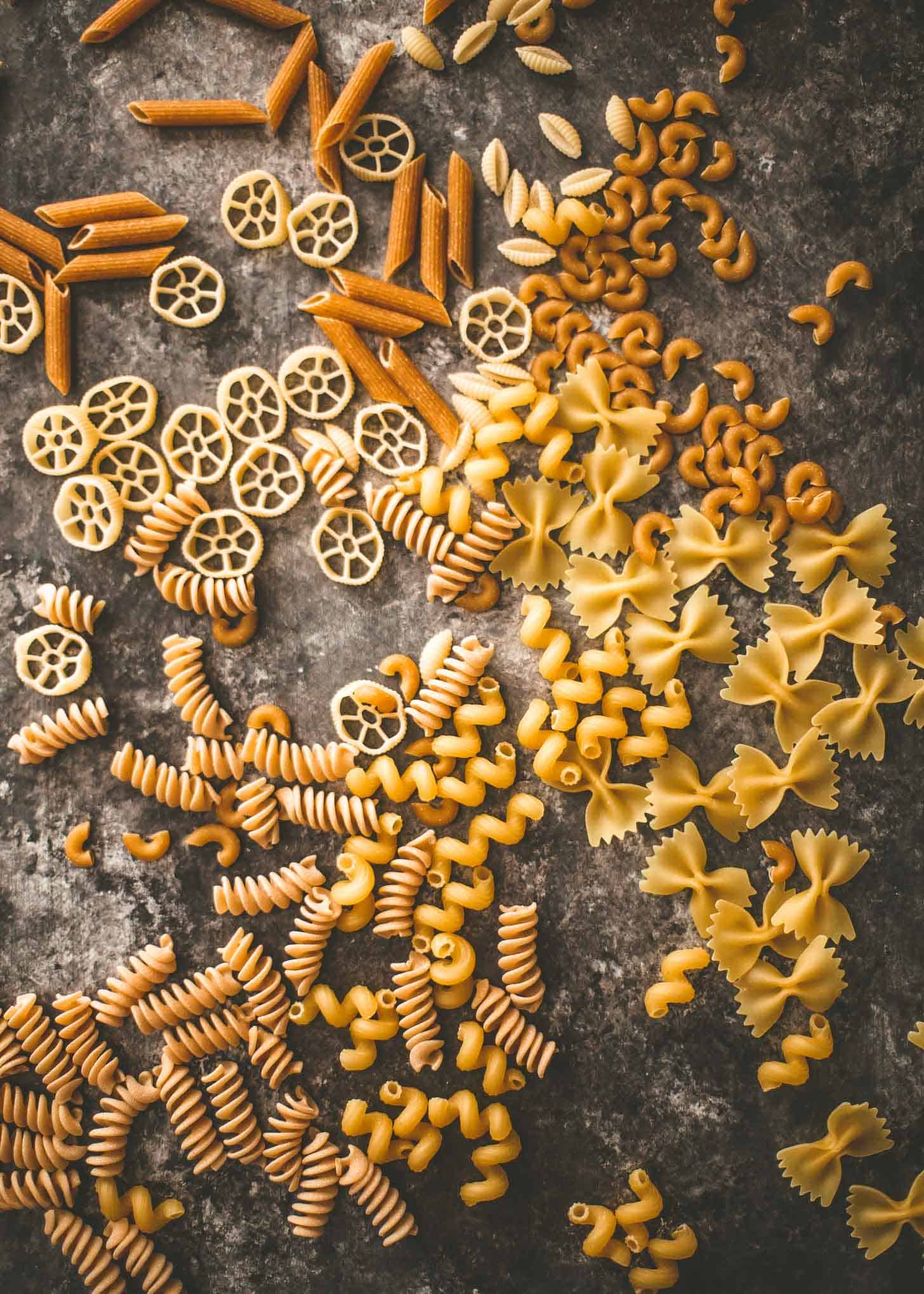
Why Cook Pasta in the Instant Pot
There are three reasons to cook pasta in the Instant Pot / pressure cooker.
- It’s a true one pot dish. No need to strain the pasta after it’s done because the pasta will absorb all of the water as it cooks.
- Set it and forget it. There’s no need to keep an eye on the pot to make sure it doesn’t boil over. Just turn the machine on and walk away.
- Keep the starch – Since the pasta isn’t strained, all of the natural starch from the pasta stays in the pot and serves as a natural thickener for any type of sauce you add – whether it’s marinara sauce (as in Instant Pot Chicken Spaghetti) or creamy cheesy sauce (as in Instant Pot Mac and Cheese).
Pin this now to save it for later
Pin It NowThe Instant Pot Pasta Formula
To cook any type of pasta perfectly in the Instant Pot (note: you do NOT need to do this math yourself – just wanted to show you how I did it):
- Find the recommended cook time on any box / bag of pasta.
- Take the lowest, even number in the range. (Example: if the range is 9 to 10 minutes, use 10 minutes. If only one time is given and it’s odd, round down. So 7 minutes becomes 6.)
- Divide in half.
- Subtract two minutes.
- Pressure cook on high.
- Use 5 minute natural release and then release any remaining pressure manually.
But there’s no need to do all that math. Just use the chart below:
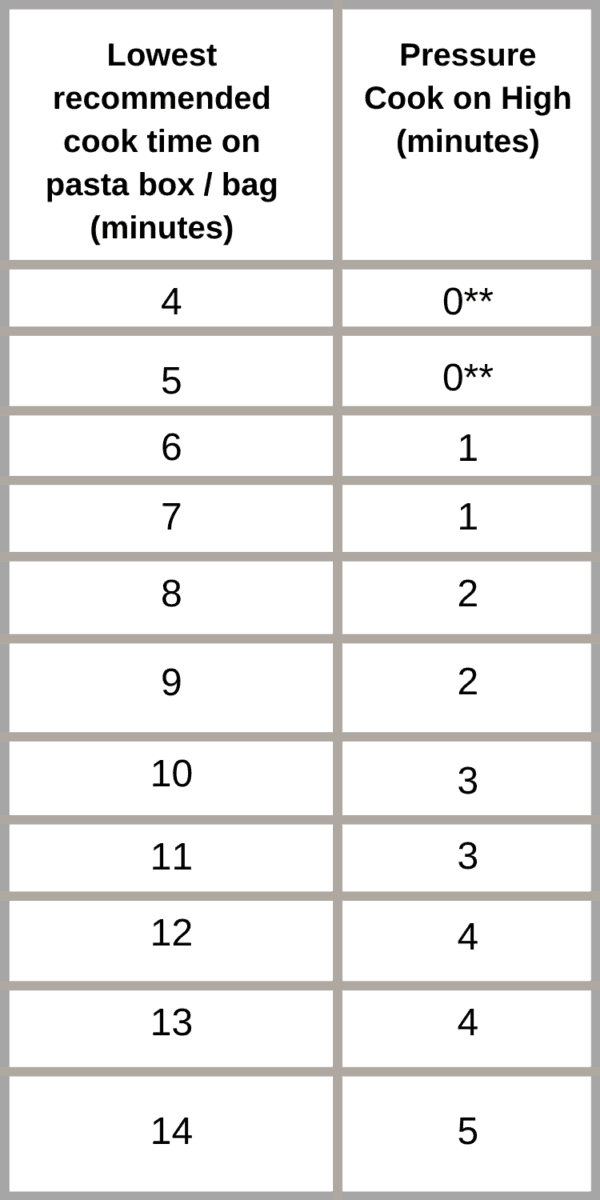
**0 is a real setting on the Instant Pot / pressure cooker. For small pasta shapes with a short recommended cook time, set the timer to zero minutes. The pressure cooker will fully pressurize but won’t hold for any amount of time.
How Much Water to Use for Instant Pot Pasta
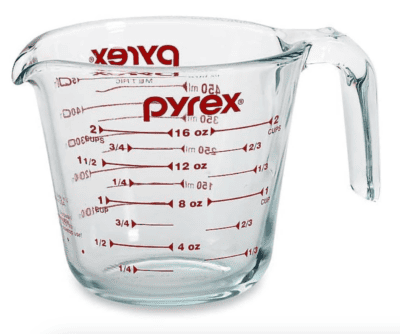
Use 2 cups water for every 8 oz of pasta. So…
- 8 oz Pasta + 2 cups Water
- 16 oz Pasta + 4 cups Water
- 24 oz Pasta + 6 cups Water
You can disregard this if you’re cooking pasta in a lot of liquid or sauce (like in a soup or ragu), but the cook times still hold true.
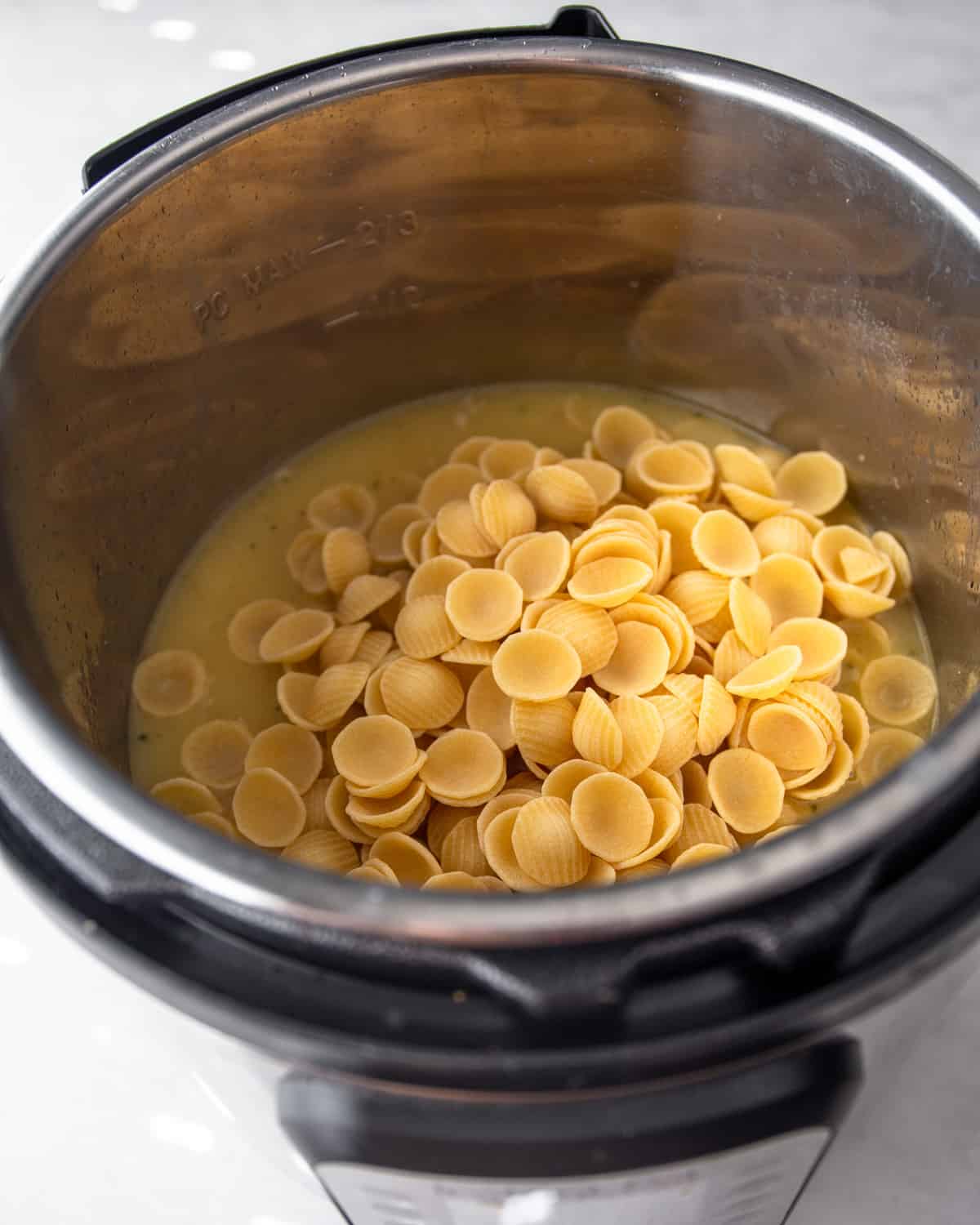
How to Cook Pasta in the Instant Pot
- Combine pasta and water (using measurement above) in the bowl of the Instant Pot. Give everything a stir so that the pasta gets a bit wet.
- Seal and lock the lid.
- Pressure cook on high. (Use the chart above to determine the cook time.)
- Leave the pasta on natural release for 5 minutes (do not let this sit any longer or the pasta may overcook) and then manually release any remaining pressure.
- Unplug the machine or check to be sure that all heating / warming functions are off.
- Open the lid and give the pasta a very good stir – about 20 to 30 times. Put some muscle into it so that the pasta gets really well incorporated with the small amount of water that remains. (Note: When you start stirring the pasta, there may still be a few dry spots on the pasta where it was sticking out of the water. Don’t worry – as you stir and let the pasta steam in the next step, it will continue to absorb the small amount of liquid in the pot.)
- Return the lid (no need to lock it just set it on top) and leave the pasta to sit for 5-10 minutes more. (Note: This step is the most important because the pasta will continue to absorb any remaining liquid and continue to cook just a bit in the residual heat of the machine. This is the key to pasta that is cooked, but not over-cooked.)
- Serve!

Cooking Spaghetti, Fettuccini, or Linguini in the Instant Pot
Long, straight pasta like spaghetti, fettuccini, and linguini can be a bit finicky to cook in the Instant Pot. The method for cooking these is slightly different than other shapes, though the cook time remains the same.
- Break the pasta strands in half before adding them to the Instant Pot so that they can easily be submerged in water.
- Pour water into the Instant Pot to completely cover the pasta (note: this is more water than you add for other pasta shapes).
- Do not stir before cooking. Resist the urge to stir the pasta. (Stirring it can cause it to stick.)
- Pressure cook pasta according to the time on the chart.
- Leave pasta on natural release for 5 minutes and then release any remaining pressure.
- After cooking, stir the pasta well to insure the strands are not stuck together.
- Drain well.
Gluten-Free / Alternative Pasta
There is no need to make any adjustment to the formula if using gluten-free, whole wheat, or alternative pasta. Because this method of cooking pasta is based on the recommended cook time on the package, any type of pasta can be cooked this way.
We tested this method with several varieties of whole wheat pasta and with several varieties of gluten-free pasta (lentil, chickpea, and black bean pasta).
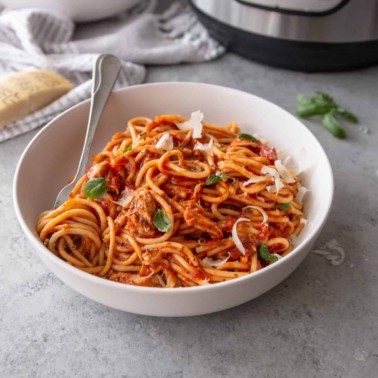
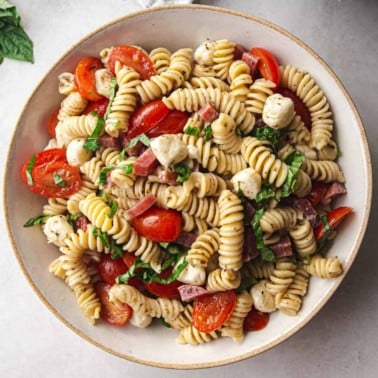
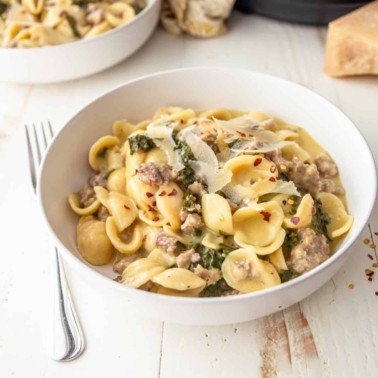
More Instant Pot Pasta Recipes

Pin this now to save it for later
Pin It Now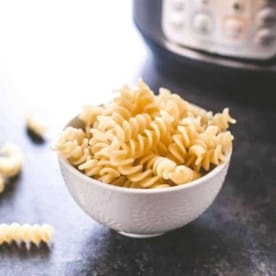
How to Cook Pasta in the Instant Pot
Equipment
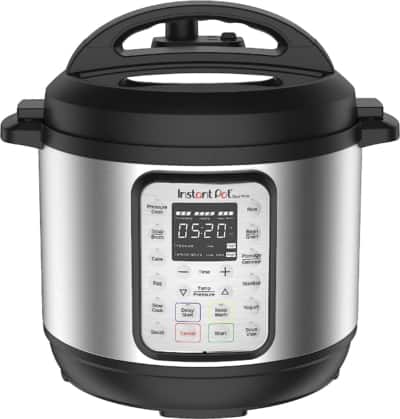
- Instant Pot/Pressure Cooker
Ingredients
- 8 ounces Pasta, any type or shape
- 2 cups Water
- 1/2 teaspoon Salt
Instructions
- First, determine the cook time for the pasta you are using. See the notes below to determine the right time.
- Combine pasta, water, and salt in the bowl of an Instant Pot. Give everything a stir. (See note below if cooking long, straight pasta like spaghetti, fettuccini, or linguini.)
- Close and lock the lid.
- Set the vent to “Sealing”.
- Pressure cook on high for the time determined in Step #1.
- Leave the pasta on natural release for exactly 5 minutes. (Note: Be very careful not to let it sit for any longer or the pasta will overcook.)
- Use manual release to release any remaining pressure. (Note: Hot and starchy pasta water may spray out of the pressure valve when you release it. Cover the valve with a dish towel as it releases to keep this contained and minimize the mess.)
- Open the lid and give the pasta a good stir, 20 to 30 times. (This will get rid of any dry spots that remained where the pasta was sticking out of the water during cooking. If adding sauce, stir it in at this point.)
- Return the lid to the top of the pressure cooker (no need to lock it just set it on top) and leave the pasta for 5-10 minutes more. (Note: This step is the most important because the pasta will continue to absorb any remaining liquid and continue to cook just a bit in the residual heat of the machine. This is the key to pasta that is cooked, but not overcooked.)
- Serve!
Notes
**0 is a real setting on the pressure cooker / instant pot. For small pasta shapes with a short recommended cook time, set the timer to zero minutes. The pressure cooker will fully pressurize but won’t hold for any amount of time.
Spaghetti, Fettuccini, or Linguini – Long straight pasta shapes like these (and angel hair, bucatini, etc.) need to be treated a bit differently than other pasta shapes.
- Break the pasta strands in half before adding them to the Instant Pot so that they can easily be submerged in water.
- Pour enough water into the Instant Pot to completely cover the pasta (note: there is no set amount, but only add water until every strand of pasta is submerged). Add salt.
- Do not stir before cooking. (This will help prevent the pasta from sticking.)
- Pressure cook pasta according to the time on the chart.
- Leave pasta on natural release for 5 minutes and then release any remaining pressure.
- After cooking, stir the pasta well to loosen any strands that are stuck together.
- Drain well.
Nutrition
Nutrition information is automatically calculated, so should only be used as an approximation.












This seems like an awesome idea, but the problem I’m having is that my instant pot will not seal when I cook according to these directions. Does anyone else have this problem? It seems like the instant pot only works with literally soup-consistency dishes, or the float valve won’t work. (I have cleaned the seal and the valve, so it’s not that) Is there something wrong with my instant pot’a valve?
sounds like it…I’ve cooked cheese cake, chicken cacciatore, pasta, pasta salad, french toast bread pudding, quinoa, rices of all kinds, bulghur…you name it. The cheesecake came out firm and perfect, the chicken fell off the bone but was hardly mush, the quinoa made the most perfect salad, the rices…well where do you begin, rice with cranberry and pecan and poultry seasoning, rice for chicken, rice for soups, etc. etc. etc. but all came out perfect and firm…I have at times had problems with my float valve. You have to be careful but when you have done a pressure release/check or made sure there is no pressure you can see how actually cooked your food is and then try and adjust for time…by eyeing it and do another repressurizing cook time. Surprisingly this has worked for me. More than once I thought I was gonna waste my ingredients but to my surprise the meals came out perfectly (pasta salad) and no one knew…my pot was having problems. Dinner was just a little late. To a degree you’ll have to use your intuition. Also, maybe a new seal? At any rate good luck!
Followed directions exactly and sadly it was a mushy mess. I’ll try again and see what happens.
Hi Zoe – I’m so sorry to hear that! The recipe is really dependent on sticking to the exact times as written. Every once in awhile I’ll get distracted and forget to release the pressure right at the 5 minute mark and the pasta will overcook – it happens so fast at high pressure. Maybe that was the issue here? Either way – I do hope you’ll give it another try! Let me know if I can be of any help.
THANK YOU!! I live in California and dread turning the stove on in the summer. I followed the instructions as you directed and WALA, perfectly cooked pasta without turning my home into a sauna. Blessing to you and yours.
That’s wonderful!!! Thanks so much for your note, Eloisa!
Normally when cooking pasta you heavily salt the water. How do you account for the missing salt in this recipe?
Hi James – thanks for your question! Typically you heavily salt the water for pasta because the water is drained off. In this method, the salted water is completely absorbed by the pasta and no water is drained off. You’ll find that 1/2 tsp of salt is to season 8 oz of pasta.
Followed recipe exactly. My seal was shut. Used correct amounts of pasta to water to cooking time to release and it was not edible😭 I wondered how this was enough liquid and indeed,it was not.
I’m so sorry to hear that, Rosanne! What type of pasta did you use?
What if I want to add pasta to an instant pot dish that doesn’t have those instructions incorporated? How do I do that? Example: Italian chicken breast recipe that makes a ‘sauce’ that removes chicken and will require sauté function following the chicken cook time. I’d love to cook it all together to infuse the flavor into the noodles but no idea how…thank you so much!!
Hi Jessica! Use the times listed as a guide, and plan to add a bit more liquid than the recipe you’re using calls for. It always takes a bit of experimentation to add pasta to an existing recipe, but with the times as a guide, it should work out.
What about fettuccine and linguine noodles – do you stir them before cooking or just stir after cooking like the spaghetti?
Hi Pam. Treat fettuccine and linguine like spaghetti. We’ll add a note for that!
Question for you….so is the pasta weight measure, or a measuring cup full?
Hi Karen. Pasta is all measured by weight.
I just followed the instuctions to the t for 12 oz of bow tie pasta and it worked PERFECTLY!
Yay!! Thanks so much for the note Kari!
Thank you for this! due to the current covid-19 crisis, I have found myself without any housing options but house-sitting an unfinished residence with electricity (and a finished bath & bedroom). So I have moved in with nothing but my dorm waterheater & the owner’s instapot.
This is the best instapot pasta website I have found. thanks you!
Hi Dia – oh my goodness – it’s no small feat cooking under your circumstances. I’m so glad that you have an Instapot. There really are so many things you can cook with that even if you don’t have other tools. Definitely try my Instapot Mac and Cheese! Take care and best of luck getting through this strange time.
This formula for cook times does not work at high altitudes.
Hi Barbara – thanks for your note. You’re absolutely right. As with most recipes, this one will needs to be adjusted for use at high altitudes.
Hi. In the Rocky Mountains. Do you have any adjustments for time?
Here is how to adjust cooking at altitude – Altitude
https://instantpot.com/cooking-tips/
Thanks so much for providing that link Kaye!
Barb it does…I’m in Denver, we are a Mile High City…5280 in feet. You can adjust your Instant Pot to High Altitude Settings and this recipe will indeed work with these cook times. Also, most folks don’t actually cook at altitude or above…so why not offer a friendly comment instead of a blurted statement. Not her fault you chose to live above sea level and you could have offered an adjustment instead of basic and flat comment. If you need to know how to adjust your Instant Pot for high altitude cooking here is a www site that will help you adjust it. In the meantime, this recipe’s cook times are just fine. Thanks to “InquiringChef” for offering some actual information. I do a lot of Instant Pot cooking and most the time folks only use the basic and skimpy Instant Pot cook times provided by Instant Pot. Pasta is NOT even included with these cook times either. Thank you.
Instant Pot adjustment settings for High Altitude:
https://www.healthyinstantpotrecipes.com/instant-pot-high-altitude-cooking-time-adjustments/
I live at 5200 ft. Dry mountain desert climate. This does work with a little tweak. I cook for 2, so 8oz of pasta. Spaghetti noodles according to instructions then… instead of draining, stir pasta, there will be a lot of water left. Put lid back on and seal for 3 mins then manually release. Perfect!
I tried 12oz fettuccine broke I half. Covered with water (2.5 cups) didn’t stir. (? I think I should have) 3 min. Because cook time low # was 10 min. 5min. release. It was stuck together even after stirring Marine Corps style. I’ll try little pasta. Thanks for pioneering recipes for unusual device which has Alien technology.
I am not sure…but I think your problem was cooking the pasta on low…rather than the high pressure setting. Hope this helps, I could be wrong but I have messed up a few and learned a couple things in the process. Best of luck.
TY TY TY! My spaghetti came out perfect. I followed recipe, except I added about 5 drops of light olive oil. There was no sticking oy clumping.
Wonderful! So glad it worked out!
Hey Dia! It’s about a year later, are you ok? Did you find more stable ground?
Thanks for the procedure Jess. That’s some crazy cool math. My wife (and I) were speculating on how you came up with the time formulas. Was it strictly trial and error? Start with science then trial and error? Voodoo? Thanks again!
Total trial and error! I cooked SO. Much. Pasta.